
Developer Artificer • Publisher Devolver Digital • Release April 9, 2026 • Played On PC
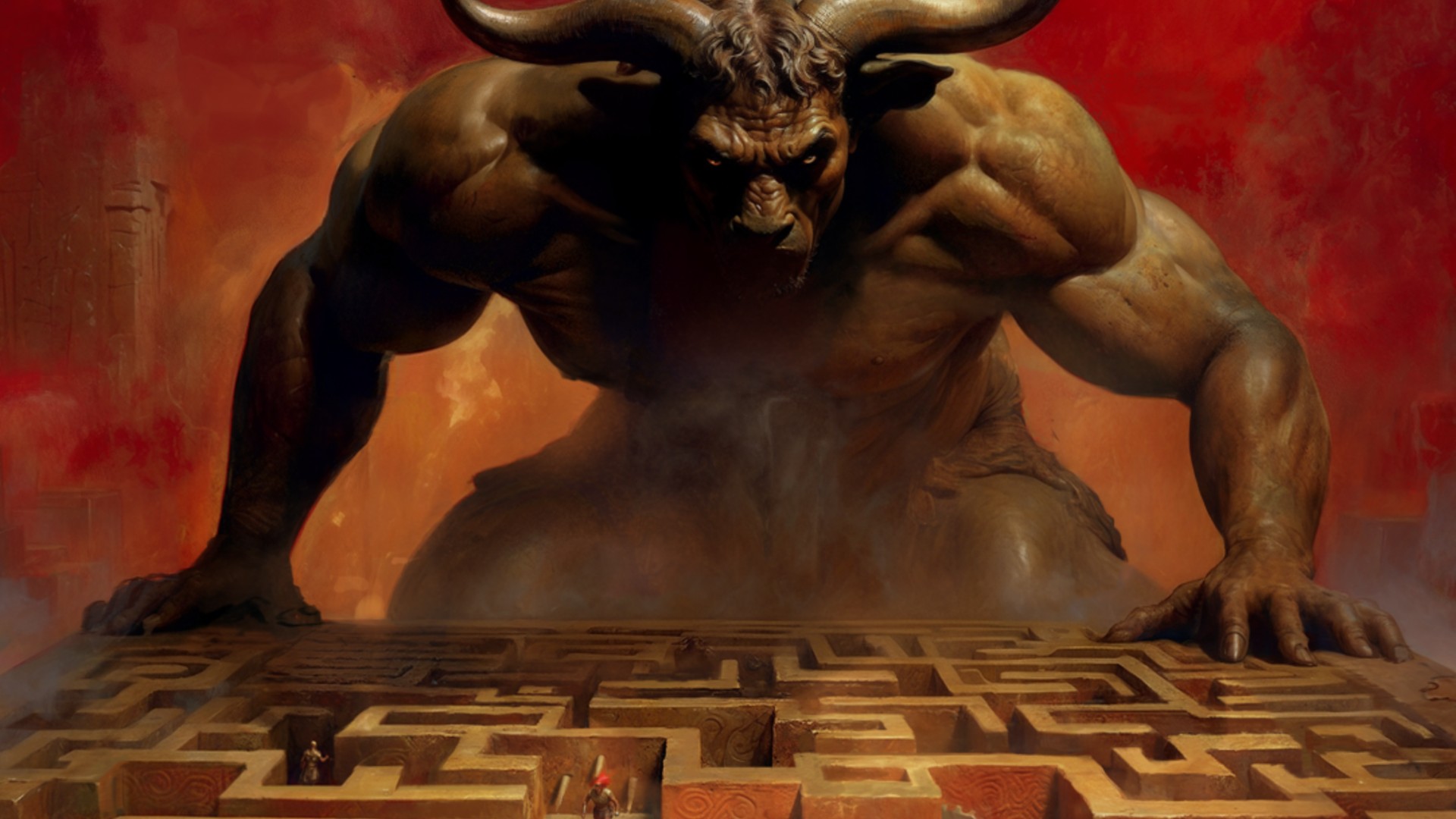
The Minotaur is one of the most well-known figures in Greek mythology. A grotesque half-man, half-bull creature that makes its home in the middle of an elaborate maze. Anyone who ventures into the labyrinth gets devoured. But what if the story we know isn’t the full truth? Minos casts you as the minotaur Asterion, fending off waves of bloodthirsty adventurers using carefully built walls, traps, and your own strength. It splices trap-based strategy with the Hades-style roguelike formula, which feels surprisingly fitting for how steeped in Greek mythology it is. Three hours with Minos shows a remarkably esoteric take on the genre, uniquely gripping in its own special way if not exactly revolutionary.
Minos drops you straight into the middle of the story with little to no context. The opening hours are intentionally vague, setting the stage with mechanics and gameplay ideas before slowly starting to peel back its narrative. And it’s that fusion of drip-fed narrative and shockingly gripping gameplay that makes Minos immediately stand out, and makes me eager to see more.

The roguelite formula of Minos has you descending into deeper layers of the maze, as it becomes more and more complex in the process. Each stage is a different layer, with a break in between each stage for you to make camp, spend XP, buy new traps, and more. But the really interesting catch is that you’re accompanied by the grizzled old man Daedalus, the brilliant inventor of the labyrinth.
In each stage, you’ll need to swap between Asterion and Daedalus, using each one’s unique skills to fend off waves of invaders. Daedalus can place and delete walls across the maze, shifting the paths that the invaders take. But more importantly, he can unlock traps using blood as a resource and place them on specific nodes. Meanwhile, Asterion can literally move around the stage, breaking dirt walls for resources and to open paths, and fight invaders himself. Enemies make a beeline for the “Minotaur’s Stash” in the middle of the map, before then seeking out Asterion, wherever you’ve hidden him.

As each stage is completely different, the beauty of Minos is piecing together a strategy — it’s surprisingly freeform in how you want to tackle things. And a huge part of that is simply the wide array of traps that the game offers you. Spikes that impale enemies, ballista that can fire down hallways, an Indiana Jones-esque boulder role, pressure plates that activate catapults, poison gas, seesaws that send enemies flying, doors that close on the third enemy that walks through, and more. Minos delights in giving you no shortage of ways to kill and maim your invaders. But, crucially, the game isn’t grim about the entire thing. There’s a level of overt quirkiness that really makes the whole thing work. Yeah, your resource is literally the blood you drain from enemies, but that’s fine. It’s all to power the machine. But equally, Minos isn’t a slapstick comedy either — it manages to finely walk a balancing line of black humor that simply works.
As you might expect, there’s an element of randomness to Minos, as you’ll need to choose from a variety of stages at each juncture, weighing your options for something easier versus a harder stage that has more payoff. But the other element that I really love here is the permanent progression. Each stage awards you experience for Asterion, gems, and money. Experience can be used to purchase a variety of persistent upgrades, from increasing Asterion’s stats to getting more traps at the start of each stage. More options unlock as you accrue experience and level up Asterion, as well as when you reach further “depths” of the maze. Gems, meanwhile, are a per-run resource that unlocks traps and items specifically for that run, so it becomes a game of trying to plan the best setup for the stages available to you.

But there’s also something else crucial to roguelites that Minos nails: A sense of wonder. That drip-fed story spreads the mystery on thick, and it’s effective. But the roguelite structure of the game isn’t afraid to layer in some neat surprises. A trap door might lead to a puzzle room where you have to push boxes onto switches to get to the treasure. Stumbling on a bloody fountain upgrades Asterion’s stats permanently, but also furthers his transformation into the grotesque minotaur. And ghostly ships might appear in-between stages, letting you use money to purchase valuable relics.
That element of randomness and mystique crucially helps keep Minos interesting, especially when paired with the equally strong strategic stages. Minos manages to hit that sweet spot of complexity and ease of play, just enough to make each stage feel unique and distinct, but never too complicated that you don’t feel like you’re making progress.
It’s enough to sell me on seeing Minos‘ journey all the way through, and hopefully, there’s something even more surprising hidden underneath the twisting halls of its labyrinth.

Leave a Reply