
Developer SlugGrove • Publisher Yogscast Games • Release March 12, 2026 • Played On PC
The growth of the puzzle genre over the years has been a magnificent sight to behold. What originally started as essentially putting the square peg into the square hole has now evolved into putting the square peg into the square mailbox, or, if you want, handing it directly to the mailman if you can learn their route. We’re seeing an increase in breakout hits and Game of the Year contenders coming from the puzzle scene because developers are starting to master the art of building the perfect puzzle playpens that bend to the player’s imagination and allow for countless creative solutions to well-crafted challenges.
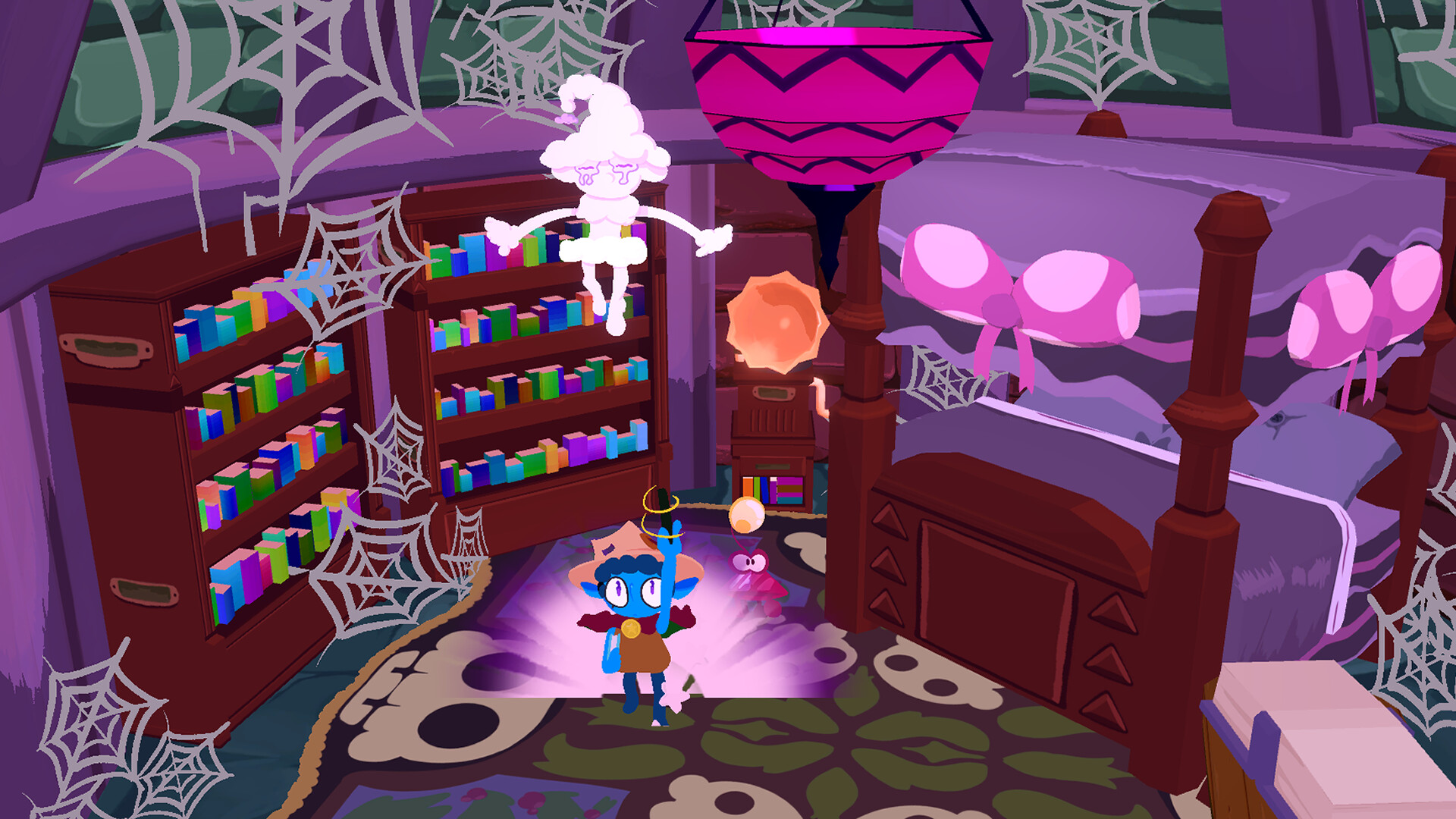
Rhell: Warped Worlds & Troubled Times aims to take this concept to its obvious endgame by building the ultimate puzzle sandbox. Given a book of spells that can be combined in any order, the player is given near-complete control over how they solve the obstacles put before them. The result is a gameplay experience that champions creativity and challenges the player to really run wild with their imagination. Unfortunately, technical shortcomings and the absence of an invisible guiding hand often result in a feeling of aimlessness and frustration that no magic spell can fix.

The idea of letting players invent their own solutions to puzzles is not entirely new. We’re nearing the 17th anniversary of Scribblenauts, a game that was targeted at a younger audience and empowered them to draw their way out of corners. The difference here is that Rhell really expands the boundaries of experimentation. The game starts with you trapped in a castle cell, when suddenly, luck leads you to a magic spellbook. After a short tutorial, you are set upon the world, free to wander and explore as you choose.
I played the first hour of the game twice, which really helped emphasize the level of variability a player could experience. Right outside of the castle gates, there’s a scroll tucked atop a gazebo-like structure. In my first playthrough, I completely blew past it, never noticing it, but in my second playthrough, I found a clever way to use my spells to push objects and create a platform so I could jump atop it and grab what turned out to be a new spell to create water. That one moment drastically changed how I approached the first major area of the game, giving me new spell combinations that I had to do without the first time around.

During my time with the game, I was bombarded by branching paths like this. I bypassed locked gates by using a bouncing goo spell instead of triggering the button designed to lift them, I leveraged my spell-casting scarecrow to throw and lift me across large distances instead of building steps out of scattered objects, and I created mini Rube Goldberg machines by casting a myriad of effects on the furniture around me to get it perfectly timed with my outlandish platforming schemes. This was all in the opening hours, and seeing the dozens of spells you can discover, it really puts into perspective how incredible it is that this outsized feat of game design works at all.

But this is where I awkwardly raise my hand and object to my own claims—because while the core system is impressive, and the “choose your adventure” gameplay mechanics do technically work as intended, there were some glaring pitfalls strewn across my time with the game that ultimately dimmed the bright spots that Rhell worked so hard to showcase.
The best puzzle games I’ve ever played offer the illusion of freedom. No one wants to be handed a microscope and be told to discover new organisms with no direction, but it’s pretty cool when a game can make you feel like that’s what happened. These are experiences that were tested and iterated upon so much that it almost feels like the developer anticipated any and all possible player interactions. In reality, the game is subtly guiding you with an invisible hand that makes sure anything you do leads you toward the overall mission. Rhell does not have that invisible hand.
Within the first few hours, I had already encountered a dozen puzzles with inexplicable goals. My only truly defined task was to reach the top of the library. However, in this maze of a building, where I could reach almost any door if I was creative enough, I had no idea which routes were optional or mandatory. I was constantly stumbling upon switches and objects that had never been formally explained, and as a result, I didn’t have enough information to determine if I needed to come back later or spend time using my endless spell combinations to creatively work out the solution.

You know how the saying goes, “When it rains, it pours,” and my frustrations with the game grew from minor annoyances to genuine unhappiness as technical challenges continued to plague my playthrough. Minor inaccuracies while casting spells in 3D space, puzzle rooms constantly needing to be reset due to out-of-control physics, getting stuck in death loops due to respawn points, and, maybe worst of all, the fact that the save-and-quit option currently takes minutes to complete are all issues that really made things more difficult than they needed to be. In a game with an infinite number of things that could potentially go wrong, there’s a severe lack of desperately needed polish.
I opened this article praising the swing developer SlugGrove took with Rhell: Warped Worlds & Troubled Times because I think the best games are born out of creative and technical risks. More so than the majority of games I’ve played in my lifetime, Rhell gives players a giant canvas and an overwhelming number of colors to paint with. I respect and admire the achievement, but I think the absence of an outline ironically restricts players more than it frees them. With a bit more polish and technical tweaks, I believe this game can become the expansive puzzle sandbox I was hoping it would be.
Leave a Reply