
Developer Ritual Studios • Publisher Playdigious Originals • Release July 17 • Played On PC
As a lifelong guitar player, I’ve often been let down by video game depictions of the instrument. Games like Guitar Hero and Rock Band were fun ways to enjoy music with friends, but there was very little about those experiences that actually felt true to the core aspects of playing guitar. No emphasis on strings, tuners, pedal boards, or really any other concepts that add together to capture what playing an instrument is actually like. Fretless: The Wrath of Riffson is the exact opposite. It’s a game dripping with details, big and small, which makes it feel specifically tailored for musicians like me who’ve been dissatisfied with other games “about music.”

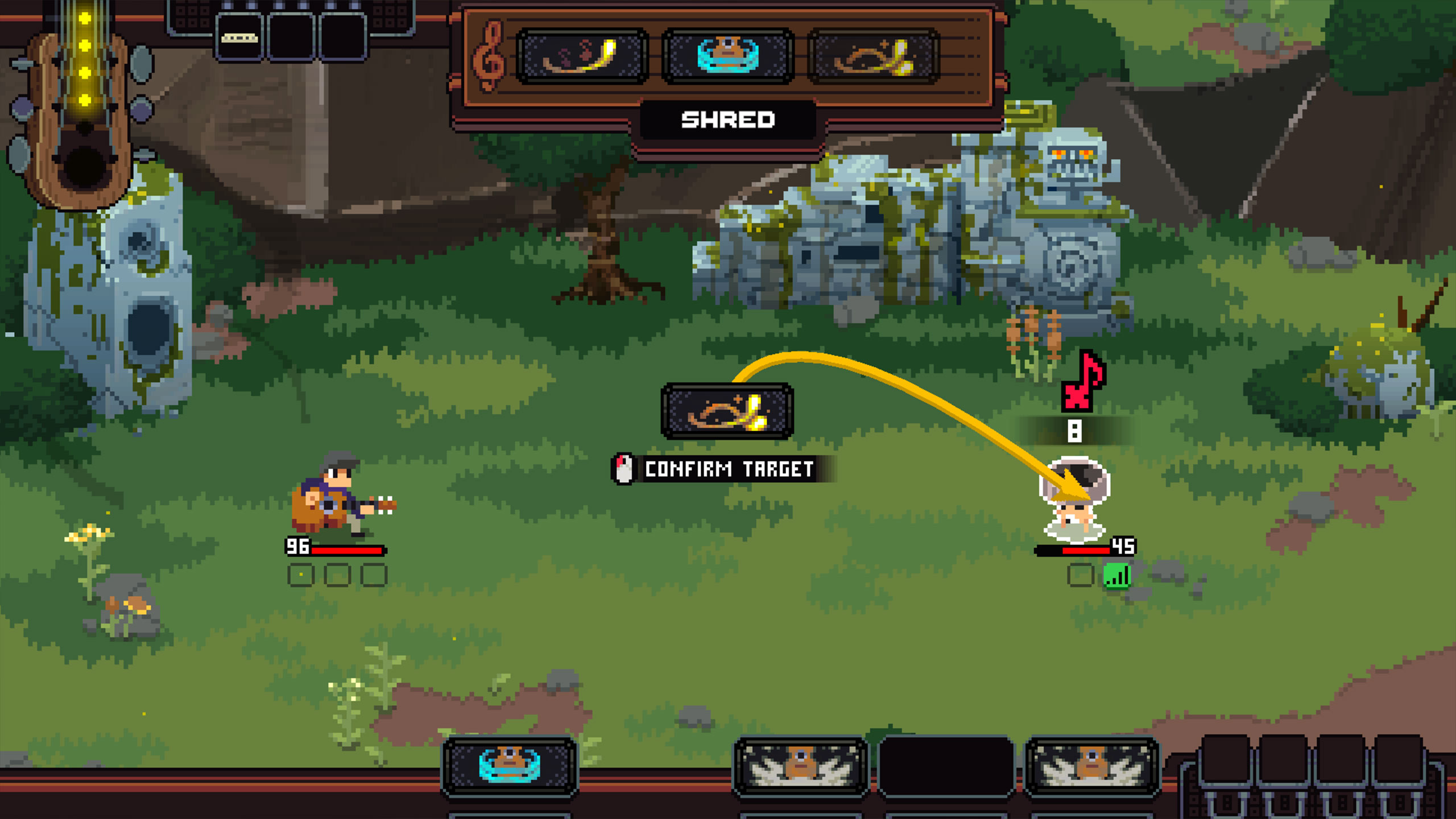
To be clear: you aren’t actually playing music in Fretless. It’s not a rhythm game akin to Guitar Hero. Instead, Fretless is a turn-based, rhythm-based RPG that follows Rob, a guitarist looking to thwart the plans of Rick Riffson, the CEO of Super Metal Records — a record label forcing independent artists into soul-crushing contracts by having them compete in a battle of the bands. It completely won me over with its use of musical instruments and gear as a device to tell an RPG story and put a unique spin on traditional RPG mechanics.
Instead of using more genre-typical swords and spears to take down enemies, Rob wields different rock band instruments, each with unique combat quirks. The bass guitar, for example, builds up a “slap” tally with each attack, dealing additional damage at the end of each turn, almost mirroring the way that slap bass relies on techniques like slap, pull, and release in real life. It’s an inventive way to recontextualize familiar video game weapons while leaning on their real-world counterparts. You might not know much about playing slap bass, but through the role it’s given in Freless’ combat, you can kind of get a feel for its role in a band.

There’s a lot of heart to Fretless, which comes hand-in-hand with its devotion to stuffing as much musician lingo in as possible. Status effects are tallied at the end of each turn using the “Status FX Chain” — a play on FX chains or loops used to create different sounds when playing electrical instruments. One of your first objectives is to make your way to Dropdee Beach — a play on “Drop D Tuning,” which is a common guitar tuning that’s often associated with heavier music like the metal bands signed to the fictitious Super Metal Records.
I could be reading a little too far into this, but I think the premise of the game’s plot is also a cute nod to the way that the “battle of the bands” is a coveted event when you’re first starting out as a fresh-faced band. With a little experience, however, you quickly realize that they’re typically predatory events put on by bars to get free entertainment.
Fretless has an air of authenticity about it that comes from its many minor musical details. It’s the sort of thing that couldn’t be made unless the team behind it has a passion for rock music and everything that comes with it, not just the glamorous parts where you’re performing sold-out shows. Pickups and strings, fretboard oil and pedal boards, workbenches caked in sawdust and guitar polish. Fretless makes me feel seen in a way that a lot of other musician-based games don’t.
I haven’t commented much on the combat system, since I think it’s best experienced first-hand, but its use of rhythm-based attacks is a twist on the real-time turn-based combat systems found in games like Dosa Divas. It, of course, has a unique musical flavor that takes notes from rhythm action games like Hi-Fi Rush or Crypt of the Necrodancer.

Fretless’ combat system also has a deck-building element to it, where the player only gets a select number of attacks — riffs — that they can use in battle. This could be another reach, but to me, that feels like another subtle musician in-joke commenting on how many guitarists have a set number of go-to riffs they like to play and incorporate into all of their tracks.
The combat never got too challenging, but that’s potentially because of how engaged I was with making sure to build well-balanced decks and capitalize on each instrument’s unique abilities.
I have minor criticisms in my first impressions with Fretless. The level design can feel plain, and enemy designs start to grow a little old after spending some time in each area. However, those are small pieces of the package. “Case candy”-sized complaints, to put it in terms the game would understand.
Overall, Fretless: The Wrath of Riffson delivers an authentic look at the fantasy that exists in every musician’s head. It’s a world where everyone cares about bands signing to sell-out record labels, where music shops actually have what you need in stock every time you go, and where the power of music can be used to enact real change in people.
Leave a Reply