
Developer SMG Studio • Publisher Fictions • Release 2025 • Platforms PS, Xbox, Switch, PC
Party games walk a delicate line. On one hand, they’re meant for everyone to be able to sit down and have some lighthearted fun, but on the other, they do usually have winners and losers, which naturally invites competition that can end in hurt feelings. While I was certainly the loser when the dust settled after my thirty-minute preview session for LEGO Party! at Summer Game Fest was over, the game did a lot to make me feel like I wasn’t a loser. In all ways, it feels like LEGO Party! has considered what makes a party game fun and how to make sure everyone — even the losers — have a good time.

LEGO Party! follows the main structure from other party games like Mario Party beat for beat – or perhaps, in this case, “brick for brick.” You choose a customizable LEGO character to be your avatar on a huge game board. You collect currency in the form of LEGO studs. You play mini-games at the end of each turn, and whoever collects the most golden bricks at the end of the game wins. It’s a tried and true formula that really encapsulates the “if it ain’t broke, don’t fix it” motto. But LEGO Party! does aim to fix some parts of the Mario Party experience by omitting a lot of the meaner-spirited moments that have caused me to shy away from recommending the series when it comes time to pick something for my group of friends to sit down and play.
When playing party games, I really don’t like getting power-ups because they often are abilities that come at the expense of other players. Sure, it might help me win the game, but I’m not so sure the goal of a party game is to win, per se. Party games are meant to bring people together and facilitate a good time, usually at, well, a party. Mario Party often makes you choose another player to steal essential, game-winning items from, but it never feels good to be the one choosing who to hurt or to be the one getting your stuff jacked, which results in no one feeling good. LEGO Party! has power-ups and encounters where you’re meant to steal from other players; however, it adds the ability to choose a random player to take from instead of pointing your thieving hands in a specific direction.
This feels like a small change, but by giving the option to let someone choose a random player to attack instead of forcing them to choose someone, the person with the power-up doesn’t feel like they’re playing favorites and the person being affected doesn’t feel like they’re being targeted. This is a welcome fix for anyone who’s played a party game with children who don’t take the news that their Super Star or coins or whatever have been ripped out of their tiny hands on purpose by their aunt or uncle or parent very well.
Additionally, LEGO Party!’s economy is much different than what you’d find in other party games since the game-winning golden bricks are awarded in greater numbers. This means that if you miss your chance to pick one up or have one stolen from you, you’re not losing one of your only chances to win the game. You’re not being showered in golden bricks — getting one still feels significant — but in our thirty-minute session, the winner ended the game with seven bricks, a number that feels a little more inflated than what you might find in Mario Party.

As the round came to a close, I was waiting for LEGO Party! to follow in Mario Party’s footsteps and award additional points and demerits based on how each player performed. SMG Studio subverted my expectations, however, when the game ended without doing anything like that. The developers I was playing with told me that SMG went back and forth on whether to include something like that in the game, but ultimately decided that it’s more fun to win on merit from playing the game instead of having the winner be chosen seemingly at random. I welcomed this change because, again, LEGO Party! was prioritizing the fun of playing a party game that feels fair over genre expectations.
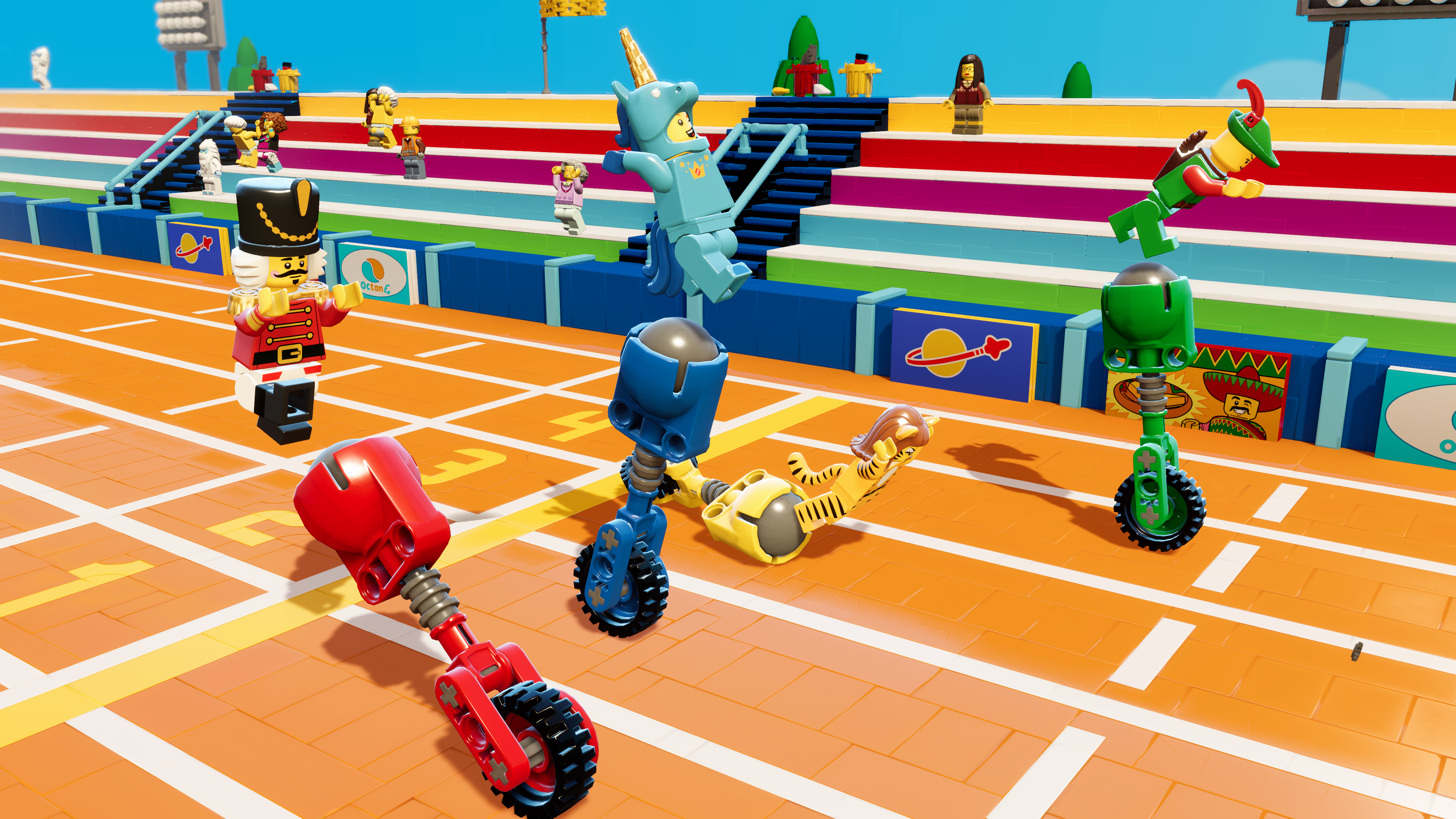
There have been a lot of great LEGO games in recent memory, but LEGO Party! takes the cake on nailing the LEGO aesthetic. As a lifelong LEGO fan, I noticed a lot of great, small details like the differences between the old-school and new-school skeleton body pieces that littered the pirate-themed map we played, the surface texture of each brick and how they correspond with the varying texture found on LEGO bricks in real sets, and the various Technic pieces that are often needed to help keep larger structures upright. When playing LEGO Party!, it’s clear just how passionate the team at SMG Studio is about LEGO, sneaking in countless in-jokes and references to popular current-era LEGO properties like Ninjago and to older properties like Bionicle (though, heartbreakingly, there isn’t much Bionicle representation in the game. Trust me, I asked.)
At every turn, it feels like LEGO Party! aims to alleviate the stress that frequently comes hand-in-hand with playing a party game and makes good on the concept that many other Mario Party-type games fail to achieve: LEGO Party! is able to facilitate a good vibe that isn’t steeped in uncomfortable competition and low-level resentment born from misguided power-ups.
With the faithful LEGO aesthetics, the emphasis on player fun over competition, and the colorful visual gags best described as “traditional LEGO humor,” LEGO Party! was one of the most promising games I got to go hands-on with at Summer Game Fest. I’m certainly much more likely to recommend it to anyone who’s been let down by the Mario Party series in recent entries, and, if it can stick the landing in its full release, it could go down as a new favorite in the genre. Here’s to hoping LEGO Party! doesn’t step on a brick when it launches later this year.


Leave a Reply