
Developer Passtech Games • Publisher Nacon • Release November 28 • Played On PS5
When The League of Extraordinary Gentlemen hit theaters in 2003, I was immediately sold on its premise of uniting reimagined versions of iconic literary characters to battle the forces of evil. It was like The Avengers for even nerdier people! Unfortunately, the movie was a massive disappointment, but the idea was still cool, and that’s why Ravenswatch has been on my radar. It features a similar premise of letting players control classic literature characters but giving them a cool comic book-style makeover. The game has been available on PC since September, but I took my first trip with the newly released console port.
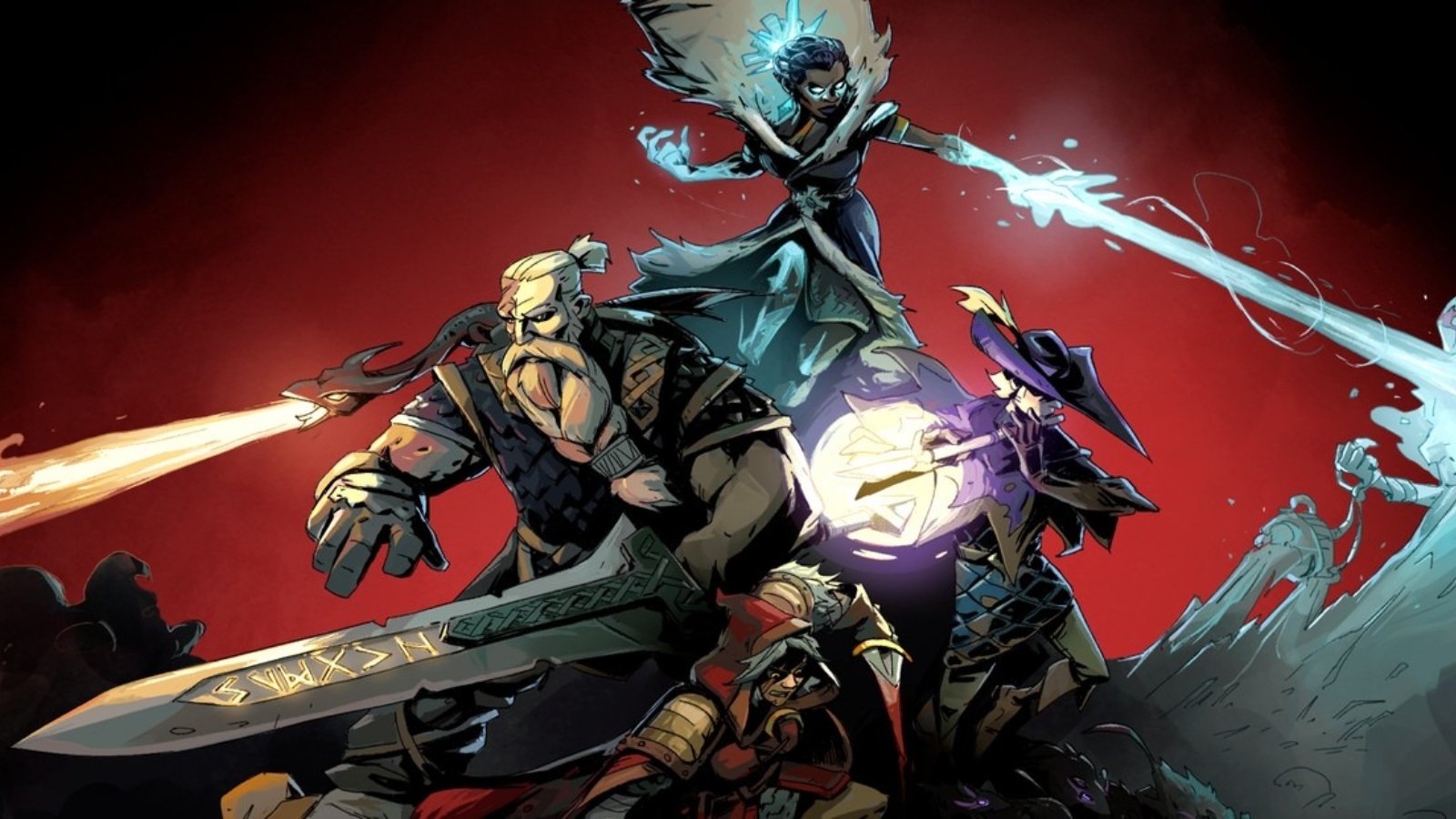
Ravenswatch stars a who’s who of popular characters. Little Red Riding Hood, the Pied Piper, the Snow Queen, and even Beowulf comprise the starting roster of heroes. These familiar faces sport cool graphic novel-esque designs and revamped origin stories to match. Little Red Riding Hood, for example, has contracted lycanthropy, meaning she transforms into a werewolf in an ironic twist. While it’s fun to pick a character based purely on the story that most entertained me as a young’un, each brings a different playstyle to the table.
Hood sports twin daggers for quick offense, but her signature trick, transforming into a werewolf, occurs only when stages shift into night. More on this later, but it adds a neat wrinkle that changes her offense entirely based on the time of day. The Piper plays somewhat like a traditional necromancer. Instead of controlling the dead, he commands an army of rats to swarm targets while pelting foes from afar with the damaging tunes of his flute. Beowulf offers a traditional warrior/barbarian playstyle, eviscerating enemies with his broad sword. He’s also backed by a small dragon on his shoulder that lends a fiery assist to his attacks and takes flight to incinerate scores of foes. Beowulf is basically like controlling a hairier, beefier Daenerys Targaryen.

Snow Queen, as you expect, can freeze enemies in place with a wide-reaching blizzard, skewer foes with rapid-fire ice daggers, and does her best Ice Man impression by sliding across an ice bridge. I enjoyed using each character to various degrees, though my favorites are the unlockable heroes. I won’t spoil them all, but my top two are Sun Wukong, Journey to the West’s staff-wielding monkey king, and the iconic vampiress Carmilla. Across the board, however, the combat feels good but it’s still a step below the satisfying and impactful fare of titles like Diablo or Hades.
Ravenswatch’s levels trade the linear, ever-shifting corridors of developer Passtech Games’ last title, Curse of the Dead Gods, for large randomized arenas. After dropping in and selecting your initial skill or perk, a three-day timer begins to count down. Once it expires, a boss monster arrives, triggering a climactic battle. Until then, you must grow as powerful as possible to slay this impending threat.

The agency in choosing how to prepare is one of my favorite elements of Ravenswatch. A good variety of enemy mobs roam the world waiting to be slain. Conditions change depending on if it’s day or night, such as the enemy types that spawn. Various points of interest can ease your adventures, such as health pools or map revealing statues. Other destinations test the player’s mettle to grow stronger. One example is a cursed tome that tasks players with killing a quota of enemies before a timer expires. Stages also contain a single, traditional sidequest, such as collecting building materials to reinforce the soon-to-be-bombarded home of one of the three now not-so-little pigs.
The world design makes Ravenswatch’s stages feel like hyper-condensed Diablo worlds. The layout changes aren’t very dramatic, though, and there’s only a small handful of things to do so the stages feel formulaic after just a few runs. Each level contains a single instance of each challenge, so you’ll be doing a survival mission or a side quest. I began skipping the house reinforcement errand simply because I’d grown tired of it. But to Ravenswatch’s credit, you don’t need to do every task every run to gain enough strength to topple a boss. Speaking of which, the bosses, such as a giant tentacle monster, are challenging but enjoyable tests that, unlike other elements, I haven’t grown tired of tackling repeatedly.

Ravenswatch’s monotony is likely remedied by its co-op. I didn’t get to try out this feature, but I can imagine slaying monsters as part of a specialized, varied team of up to four players would keep things fresh and engaging. On my own, I enjoy Ravenswatch most in smaller sessions of a run or two while enjoying a podcast episode. It’s got just enough meat on the bone to occupy a smaller chunk of my day. I have doubts that it has enough hooks to compel me to see any of these character’s stories to their conclusions, but I’m enjoying my succinct reunions with characters that made reading such a joy for me growing up.
Leave a Reply