
Developer Maboroshi Artworks • Publisher Chorus Worldwide • Release October 10 • Reviewed On PC
“First loves. Family issues. Yokai.” Last Time I Saw You‘s Steam description lays out its central focuses. What I didn’t know the first time I read those words is that the order — as well as being a clever wordsmith’s technique to capture attention — underscores the hardest-hitting narrative elements in order. Yes, there is a rich world of Japanese mythology to explore that is, at times, eerie and joyful.
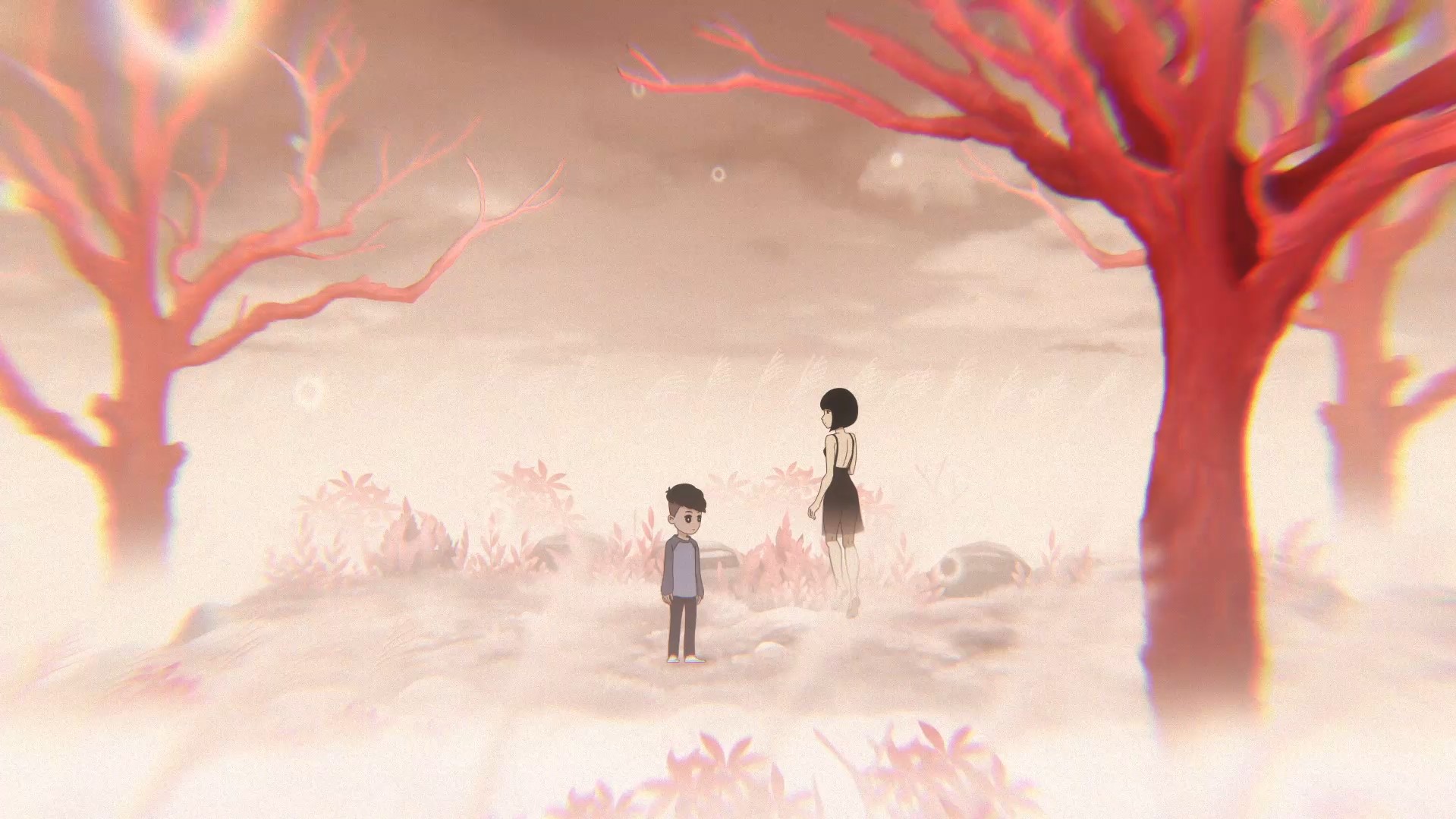
However, even with the supernatural, world-ending problems at hand, I was always equally enraptured with the game’s loving depiction of mundane life. It showcased human struggles with such an empathetic lens that I felt them as strongly as any of the “larger” issues. I became almost nostalgic experiencing the daily rhythm of the small village, and so my entanglements with Yokai — and their consequences — had even more weight. The splendid use of light shimmering over the hand-drawn art only made it that much harder to look away.

It’s wonderful when a game delivers the experience I envisioned after finishing my initial hands-on opportunity. I walked away from Last Time I Saw You last year eager to pull back the curtain on its mysteries, having seen my character caught up in a potentially deadly spiritual storm. I filed it away as a game with narrative potential I should keep an eye on.
That potential bloomed beautifully. As the adventure begins, I play as an ordinary young boy. Dinosaur stickers plaster my room and I compare my height to a plant in the hallway when coming downstairs to meet my family. To my delight, this foliage-centered rivalry sweetly reappears later in the adventure, offering a moment to reflect on how much I’ve changed throughout the story.

My mother, worrying over an impending storm, sends me off into the village to buy carrots. This gives me an excuse to explore my humble and relatable ecosystem. A pair of neighborly gossips spill the latest tea as I sweep forward to pet their adorable dog. The local policeman puffs up with self-importance barely hiding his inner anxieties. The town’s merchants boisterously berate each other as I dutifully try to complete my mission. But most importantly, my friends happily gather up my attention with shared words and familiar games. I’ve never lived in a quaint Japanese village, but after all of this, it almost feels like I have, which is an impressive feat.
Then the supernatural storm smashes into my ordinary world. The event places my village and everyone I love in mortal danger which only I seem to be able to stop. Or is that true? Trust, and who I should give it to, plays a major role in the ongoing narrative. Is the being I’ve been seeing in my dreams really a force for good? It’s easy at first to believe but doubts slowly flood in after seeing how they treat lives and cares so callously.

Should I trust my friends with what I’ve discovered, and would they believe me if I did? The ramifications of this more personal struggle slowly frays my closest bonds. The relationships around me, as if I needed more to worry about than the end of my life as I know it, also begin eroding concerningly from lack of trust and — despite the fact I’m the hero saving the village from looming peril — there’s nothing I can do to fix this. The juxtaposition is aptly painted.
However much I appreciate these elements, not everything holds up as strongly. Namely, the game’s indifferent performance and chafing old-school saving system. Transporting from one location to another — via a well-thought-out fast travel system — sometimes seemed to stutter. More than a few times, I would be in a dialogue when my character (who I could no longer control and should have been frozen in place) would slowly drift across the screen, leaving the conversation boxes behind. I was still technically in “dialogue” mode though. So, I would have to hit buttons blindly hoping to get out of the situation, thus missing some, possibly crucial, context.

Like the air after a downpour, Last Time I Saw You‘s refreshing narrative and glistening visuals made up for some of its technical weakness. It was hard to put down. I needed to weather each chapter’s storm, made both by monsters and men, to learn the fate of the village I’d grown so fond of.
I recommend this game to:
- Adventure gameplay fans
- Yokai enthusiasts
- Those looking for a relatively short game
- Players who can’t resist petting the dog
- People looking to simultaneously experience the familiar and unearthly
- Anyone who has ever felt like everything was crashing down around them

Leave a Reply