
Developer Stone Blade Entertainment • Publisher Stone Blade Entertainment • Release April 16, 2024 (Early Access) • Platforms PC
I went to my SolForge Fusion appointment at PAX East expecting to play a demo of the physical card game. To my surprise, I discovered the team at Stone Blade Entertainment, the studio behind the popular deck-building game Ascension, was showing off the digital client of their newest card game, and here’s the kicker – it’s fun!

It’s no secret that I’m a Magic sicko. It’s a big reason why the people behind SolForge Fusion drew me to it in the first place. Both games certainly share some common DNA. After all, SolForge Fusion is the brainchild of the father of Magic: The Gathering, Richard Garfield, and former Magic pro, Justin Gary. While there are plenty of similarities, it’s the fundamental differences that make SolForge appealing, especially to those who may like the idea of card games but are put off by all of the setup and extra homework needed to play.
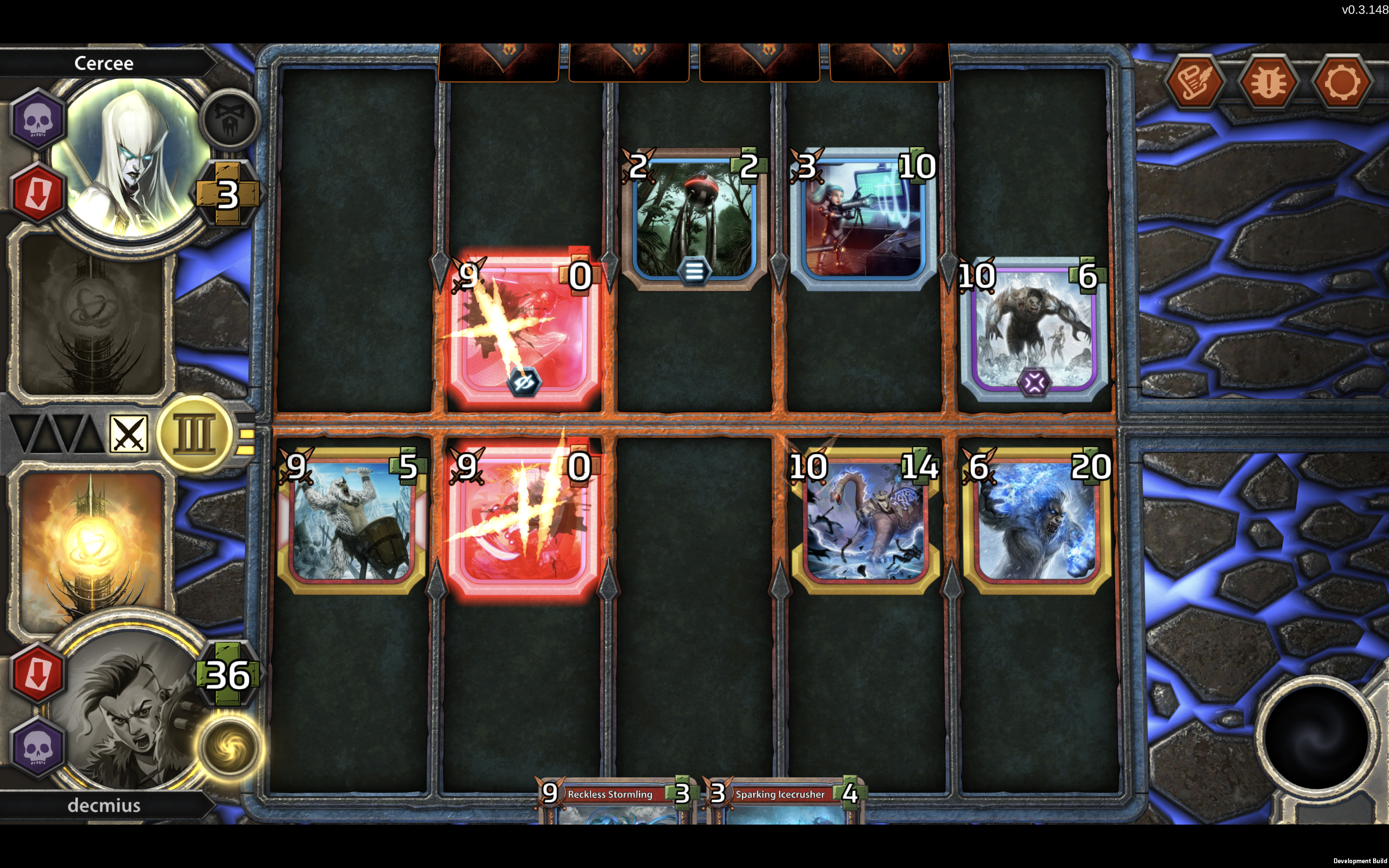
First off, you don’t need to piece together a deck. SolForge Fusion is played by shuffling together two pre-built packs of cards to complete your playable library. Your deck consists of twenty level-one cards to start the game, with level-two and eventually level-three versions that replace the previous levels as you play. These higher level cards will build on the abilities of original card, such as increasing the health and power of a creature or giving spells a greater effect. It’s a smart system that makes every card mechanically memorable and relevant as the game progresses and escalates. I would have been immediately confused by the concept if the game had not done the work of replacing the cards for me.

I played a few games against the CPU, taking turns with them playing cards on the five-lane battlefield. It takes me a few turns to grasp a mechanic called the Forge, which passes between players on every combat phase and determines whether your creatures are on offense or defense when played. Unlike Magic and other similar card games, SolForge Fusion doesn’t have a resource system in order to play your cards, instead opting to allow two card plays per full turn cycle. While I enjoy the complexity and risk of a traditional TCG mana system, I didn’t miss it at all here and enjoyed executing my plan instead of whether I had the resources to pull it off.
The final significant aspect of SolForge lies in the Forgeborn. One of these heroes is included with each booster pack, with one being chosen to accompany your deck when it’s created. The Forgeborn is a fun addition that gives you a choice in how you want to play the game. Each Forgeborn offers three one-time perks throughout the game to give you the upper hand. For example, Sunder, a spell-centric character from the red faction called The Tempys, gives me extra spells to play and a game-ending ability that deals damage whenever I play a spell the turn it’s activated.

SolFoge Fusion’s digital client entered Early Access on Steam this week. Even in its early state, it’s a great place to cut your teeth and learn how to play the game. The tutorial I played at PAX is included to wade into the pool that is the procedurally generated campaign, which, I’ve been told, its CPU opponents are not designed not to be pushovers. If you really want to dive into the deep end, you can play other SolForge players in one-on-one online battles, which I’m not sure I’m ready for quite yet.
Like many card games, SolForge Fusion has a steep learning curve in some places, but it’s far from insurmountable. That’s thanks to the simplified deckbuilding and resource management that have been ferociously sanded down. I don’t think I’d have been interested in playing more if not for the digital version, which smoothes out the complicated steps and dramatically eases the process. Now that it’s available to play at home, I’m excited to dive back into it this week and try my hand at its single-player content and learn more of its intricacies at my own pace.

Leave a Reply