
Developer Simogo • Publisher Annapurna Interactive • Release May 16 • Platforms Switch, PC
“The goal of the game is to find the truth,” says the in-game instruction book I found in a glove compartment of a car that might be mine opened with keys in a purse I might own. But I can’t be sure. I can’t be sure of anything besides the fact that I need to get to the center of the maze that is Lorelei and the Laser Eyes. Fans of classic survivor horrors, brain-teasing puzzles, and compelling mysteries need to be prepared for a day-one purchase.

It didn’t take long for Lorelei to ensnare me. The first moment of the game — a Dutch-angled narrow shot colored only with shades of black and grey — stares at me. I’m well-dressed, fashionable even, and my perfect up-do is so out of place in the surrounding foggy woods. Just behind me is a car. The obvious conclusion is I’ve just stepped out of it, which is backed by the fact I hold its keys in my inventory.
Instead of trudging through the rustic landscape to a destination I can’t fathom, I choose to riffle through the vehicle. My options include turning the car on, playing the radio, and opening the glove box. Being nosey, I go with that last one first, finding two documents: a letter and an instruction manual. The letter seemed like it would be the most interesting (spoilers: it wasn’t), so I quickly tore into it.
This is the first clue — in a lot of ways. First, a message pops up telling me a memory has been unlocked, which prompts a series of racing questions. Why would the memory of this letter be unlocked if I presumably received it and read it before coming? Is this not my car? If not, how did I get here? What’s really going on?

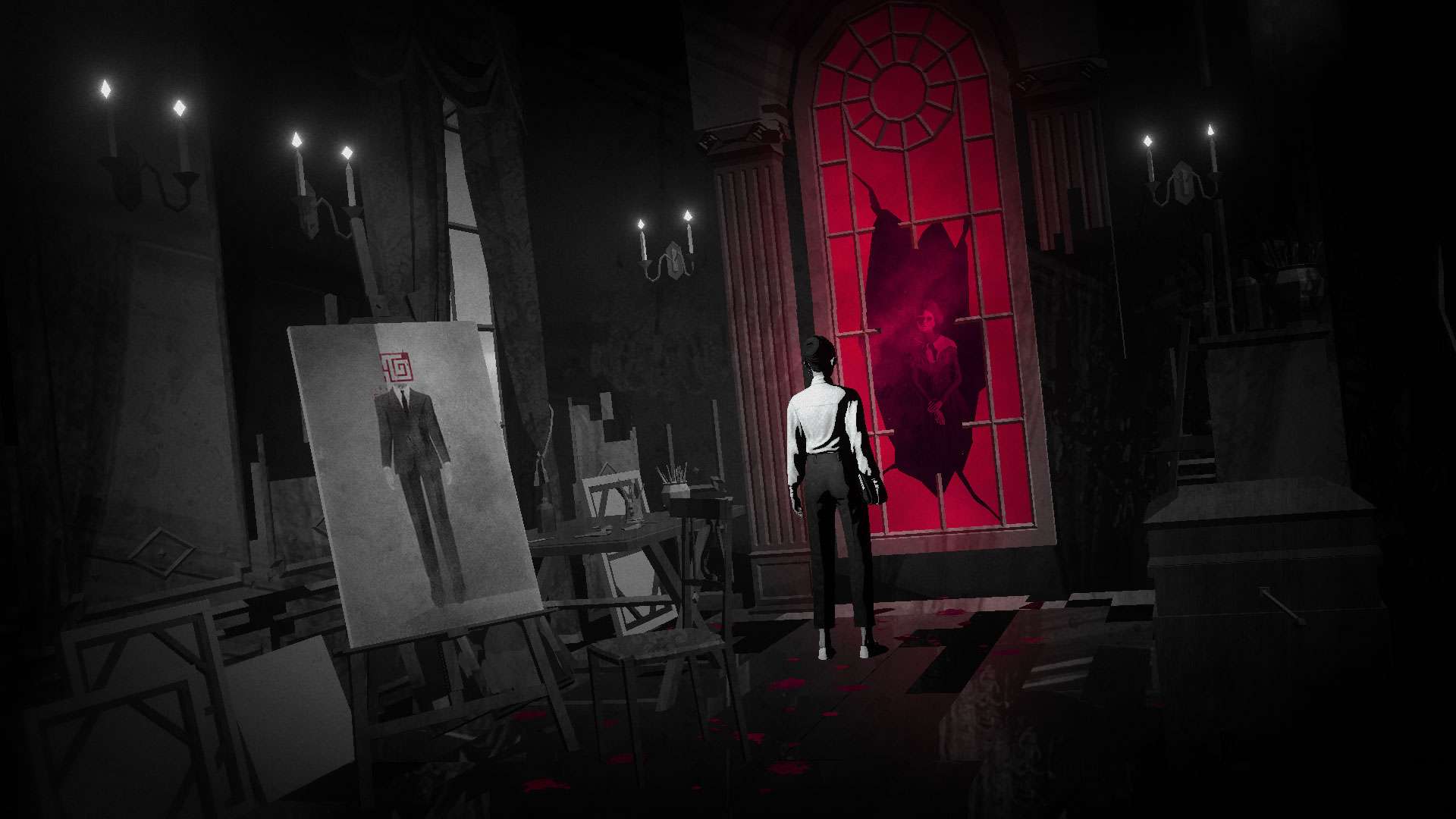
More conventionally, the letter also spells out some of why I’m here. An artist, who has signed his name R. Nero, has invited me to an old hotel to work on a once-in-a-lifetime project. There are also several lines in the missive underlined in red. It’s the first note of color in a game that is otherwise suspiciously monotone. The vibrant hue will go on to play a large part as the mystery unfolds. For now, it points to information that any puzzle aficionado would recognize as the solution to a future problem.
But moving on to the booklet next to the letter turned out to push my brain even closer to the edge. Instead of the car instructions I was expecting, I found myself metaphorically face-to-face with the developer. The typed pages contained copious notes on how the controls worked or how to read the menu. Like one of my favorite games of all-time, Tunic, this manual was a meta-guide inside the game on how to navigate the game. I was both in love and very paranoid.
So much so, I stopped to play every possible channel on the radio to make sure I wouldn’t miss any hidden messages. Everything in this game was now suspect, and nothing could be dissmissed out of hand.
That’s the state I found myself in as I walked up to the locked gates of a glamourous hotel that also just didn’t seem to fit in the forest. With no obvious way to open the barrier, I watched as the most unexpected hint-giver bounded past. A good boy named Rudi sat happily staring with his big puppy dog eyes at me from the other side of the gate with a letter in his mouth.

It’s a genius play on Resident Evil. Everything from the game’s inventory system to its forced camera angles fed into the survival horror feeling, and when I saw a dog, I expected the worst. But the black cutey in front of me sits patiently — its head slipped through the bars — waiting for me to collect its important delivery.
Going to the left of the gate, I find a small office with an ominous glow of red coming from an old-school computer. This is the only way to save — another survival horror touchstone. The small room also contains a monitor connected to the surveillance system that I can tweak to get the shot in focus, a handheld console, and a lock that needs a four-digit code.
Before solving the puzzle, I pick up the “Byte Seyes Gaming System” which works as a menu showing me things like the truth I’ve collected (in other words my progress in the game), my stress level, caffeine level, bladder (um, what?), and how much money I have. Everything about this is designed to make me giddy. The pun name, the baffling implication of some of its categories, the alternate-reality Game Boy look. This is the way to do in-game menus.

I quickly unlock the gate, give Rudi a good pat on the head, and stroll into the grand hotel. It’s empty of people but full of mystery. Everywhere I look is another puzzle, another book brimming with potential clues, another locked door, or another corridor to follow. It’s almost overwhelming. But just before losing hope thinking the game is way too smart for me, I head back to the lobby and find a man waiting for me.
He creates as many questions as he answers, unsurprisingly at this point. He is a guest staying in the hotel. He has left a key to my room behind the reception desk. He is just a phone call away if I need anything. Having explained all of this, he disappears to his room. Oh, and I should mention he is splattered with ominous red splotches, but let’s not worry about that, yeah?
On my way behind the reception desk, I discovered a phone. True to his word, my mystery man answers the phone when I call his room number. It turns out the game has given me a hint system should the puzzles prove too unwieldy going forward. I hope this helps alleviate frustration in the future as puzzle games like this can fall victim to being too clever. And while this is an early demo of the game, I picked up on one other element that might cause problems in the full release.

Everything is handled by one button. If I am standing close enough to an interactable object when I push a button, I’ll interact with it. If I’m just standing, I bring up the menu with the same button. Inside of puzzles, any button will interact and there is no designated “cancel” or “go back” button. Which means I have to navigate to the option to walk away or close a menu before I can leave the current screen. It’s not game-ruining, but something that tripped me up during my playtime.
Of course, the promised key to my room in the hotel is safely tucked away in a locked cabinet with a pattern puzzle. With a new direction and a literal phone-a-friend option, I end my preview full of, perhaps unearned, optimism. What truth is there to find buried somewhere in the depths of this decaying building? It’s hard to say, but the mysteries in Lorelei and the Laser Eyes will whisper to me until I figure it out.

Leave a Reply